
Immersive experiences for groups & organisations

Metaphorology

Sometimes the clearest way to see something is to see it as something else.

A client said recently that all their sessions had begun to feel the same. Metaphorology changes the conditions of the room. People make with their hands, move through space, and work with stories, myths, and symbols. Imagination becomes part of how the group thinks.

Don't think outside the box… reimagine the box.

Two ways

A metaphor can open a conversation. It can also hold one.

We work best in person, where a question can be placed on the floor, walked around, made from clay, unfolded, drawn, inhabited, or carried through a story. The method can be adapted for virtual rooms, but its natural home is among bodies, objects, and shared space.

01 Metaphor holds the room

Give the work a shape people can enter.

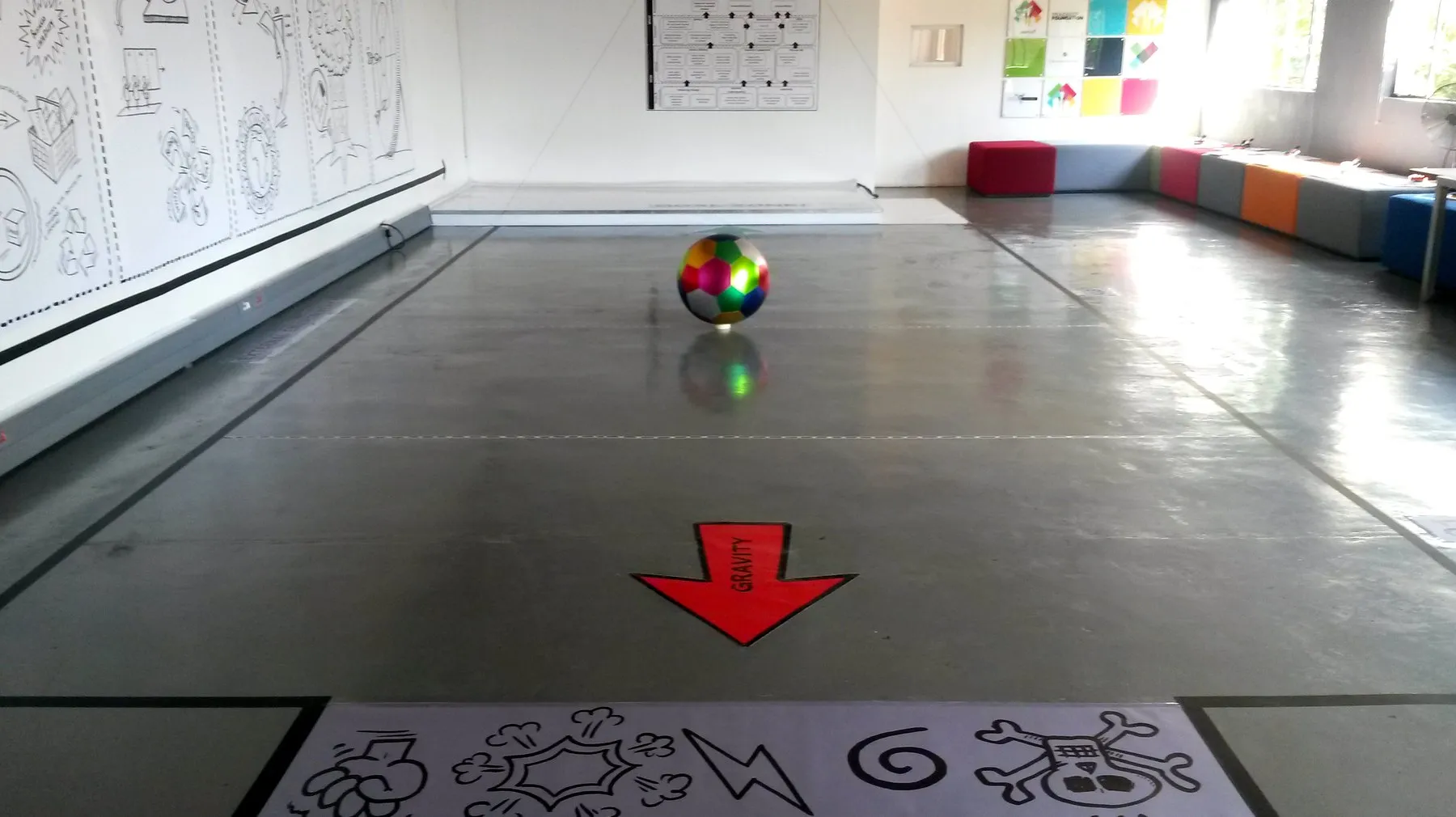
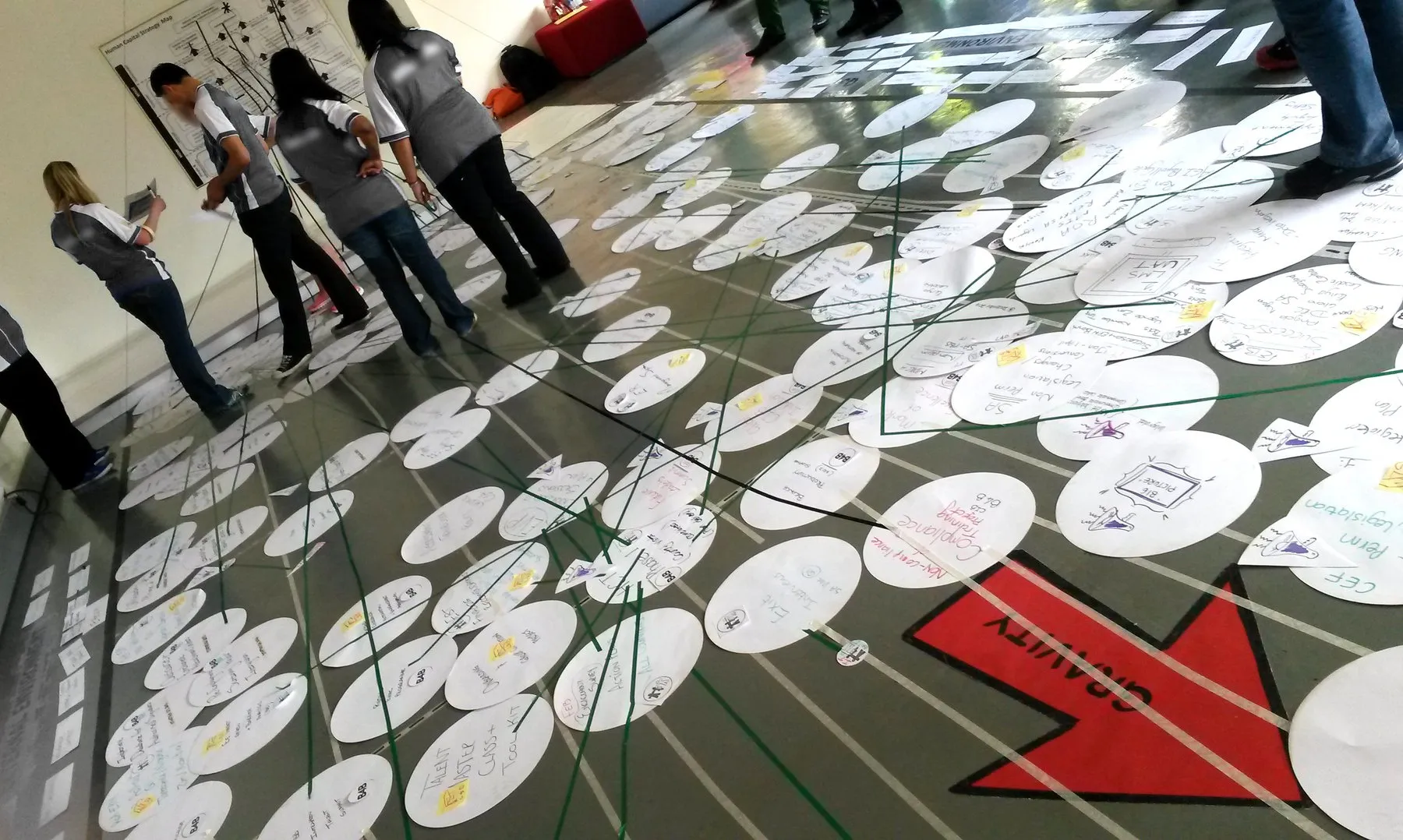
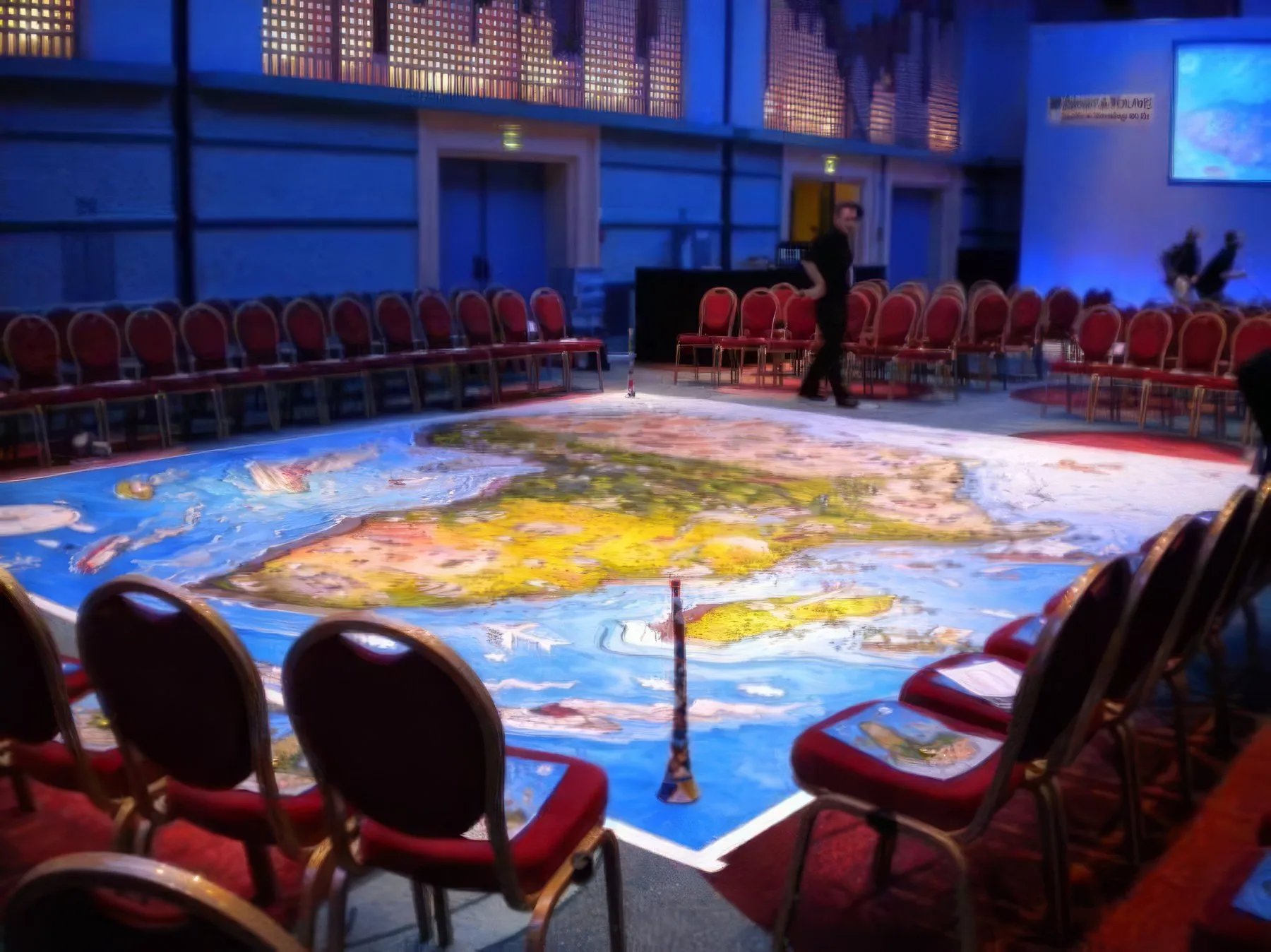
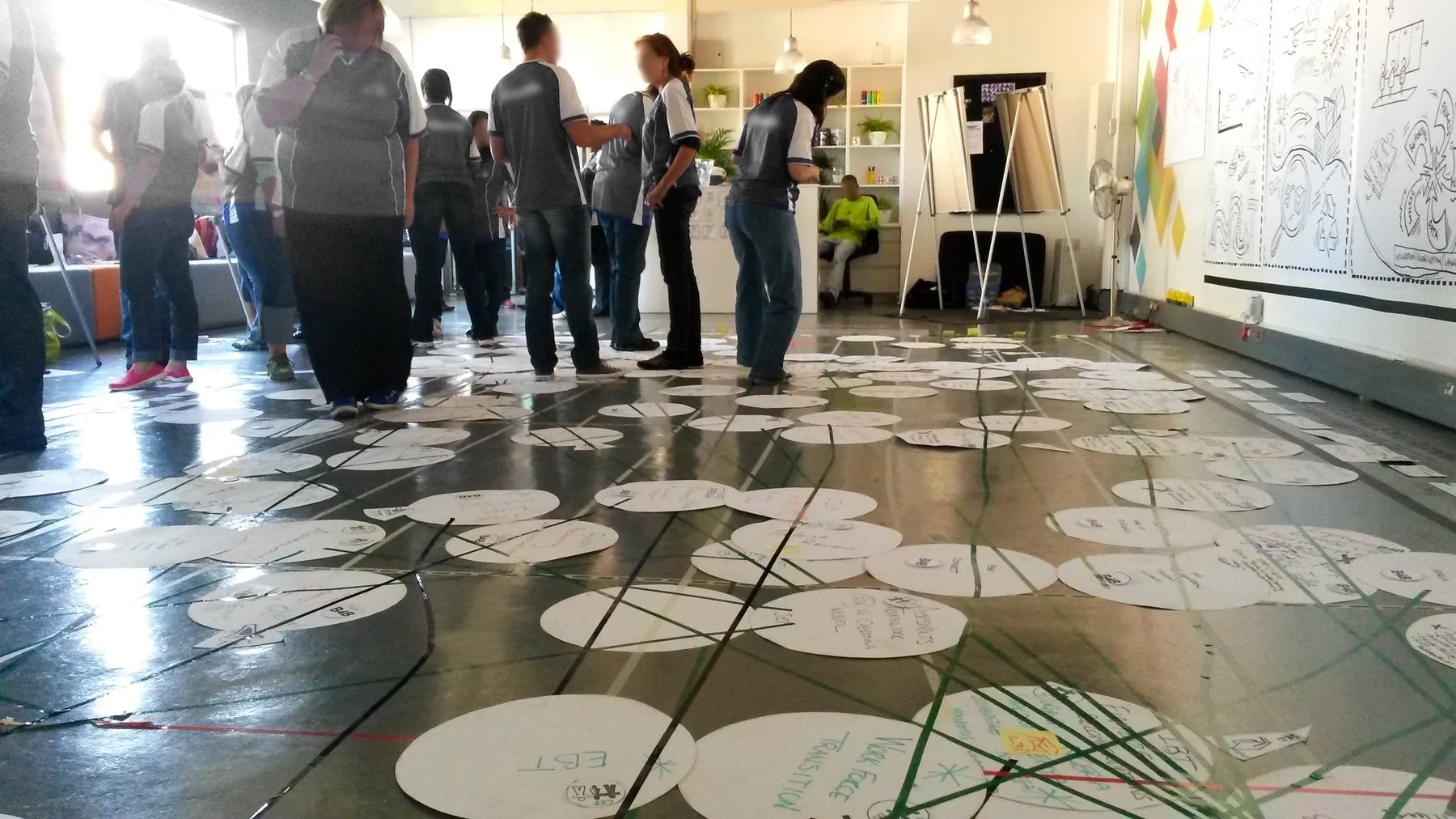
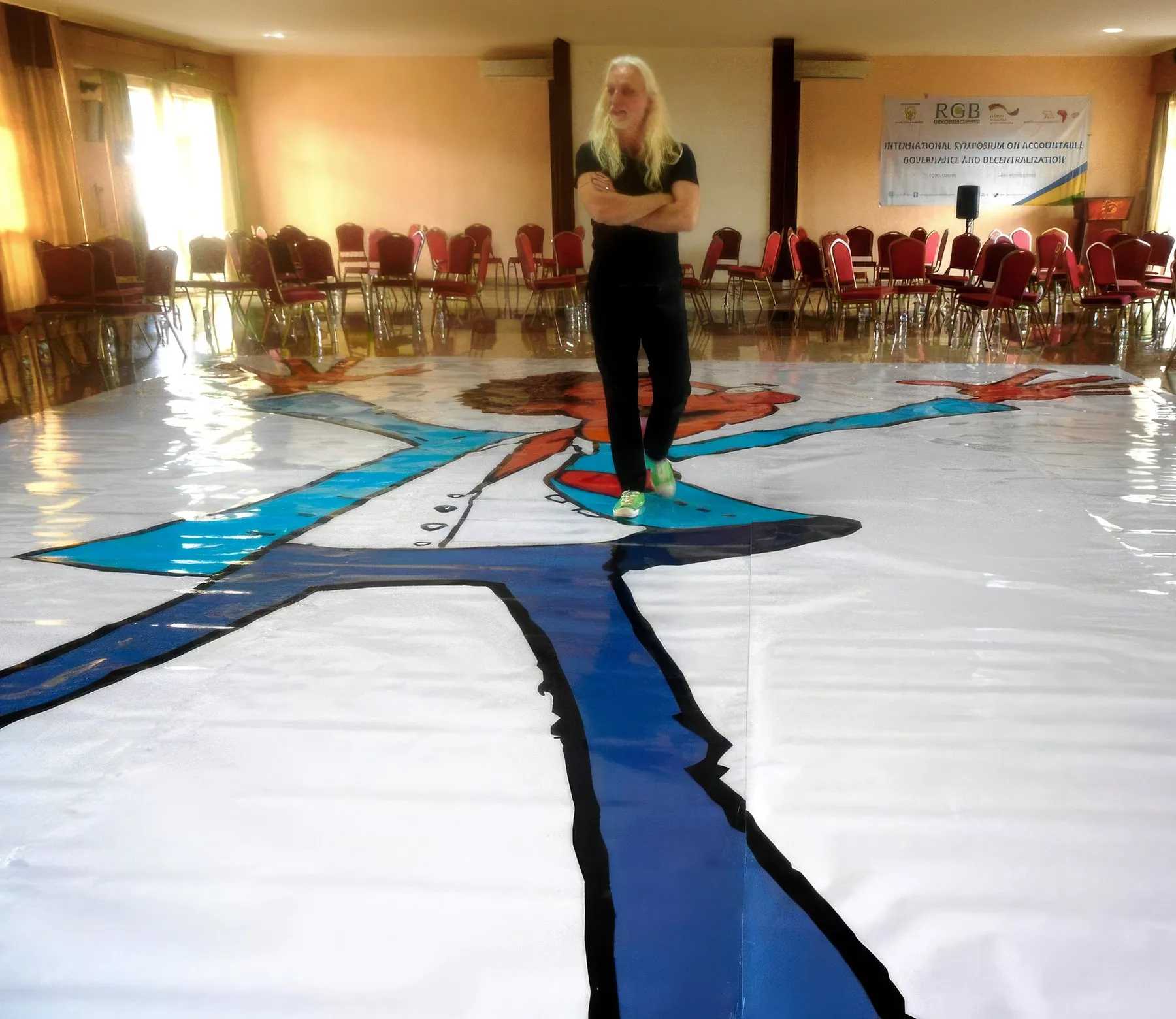
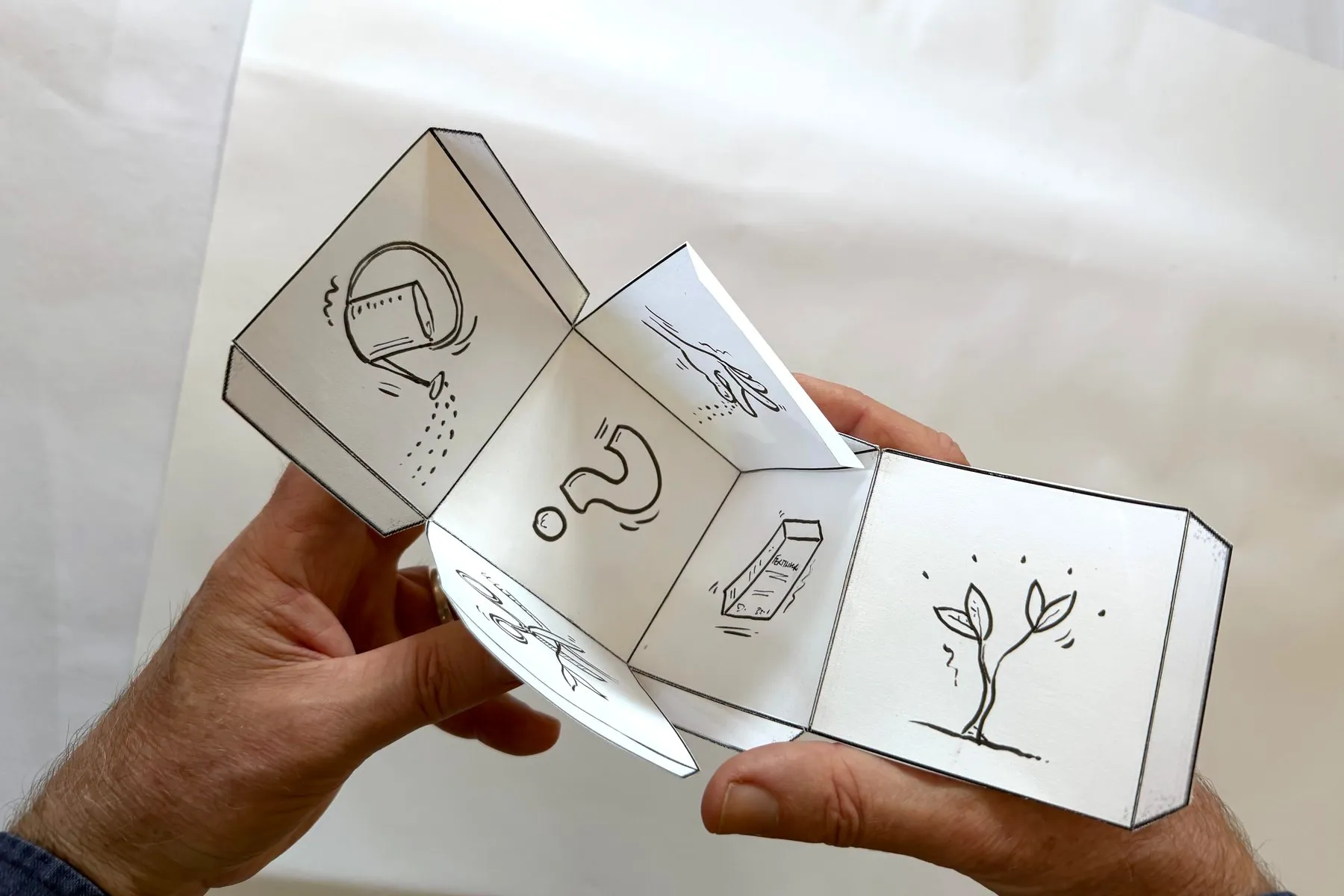
We find a living metaphor for the question at hand and build the experience inside it. It may be a box that unfolds, a page that turns, a myth that changes, or a line on the floor that asks people to take a position and then move. The metaphor gives the work a physical shape people can enter.

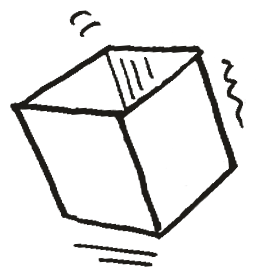
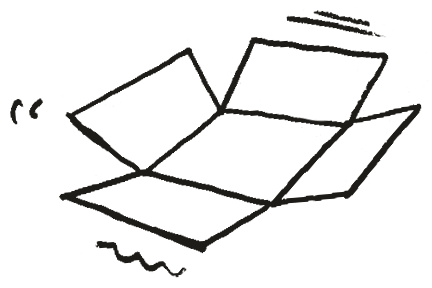
Tired of “thinking outside the box”? Deconstruct the box. Each side carries a provocation. The box unfolds, the thinking opens, and participants refold it into something else.
Metaphorology session, photo 1 of 9: a group working on a large floor map
Metaphorology session, photo 2 of 9: a group working on a large floor map
Metaphorology session, photo 3 of 9: a group working on a large floor map
Metaphorology session, photo 4 of 9: a group working on a large floor map
Metaphorology session, photo 5 of 9: a group working on a large floor map
Metaphorology session, photo 6 of 9: a group working on a large floor map
Metaphorology session, photo 7 of 9: a group working on a large floor map
Metaphorology session, photo 8 of 9: a group working on a large floor map
Metaphorology session, photo 9 of 9: a group working on a large floor map
In the room

02 Metaphor as diagnostic

See how the system sees itself.

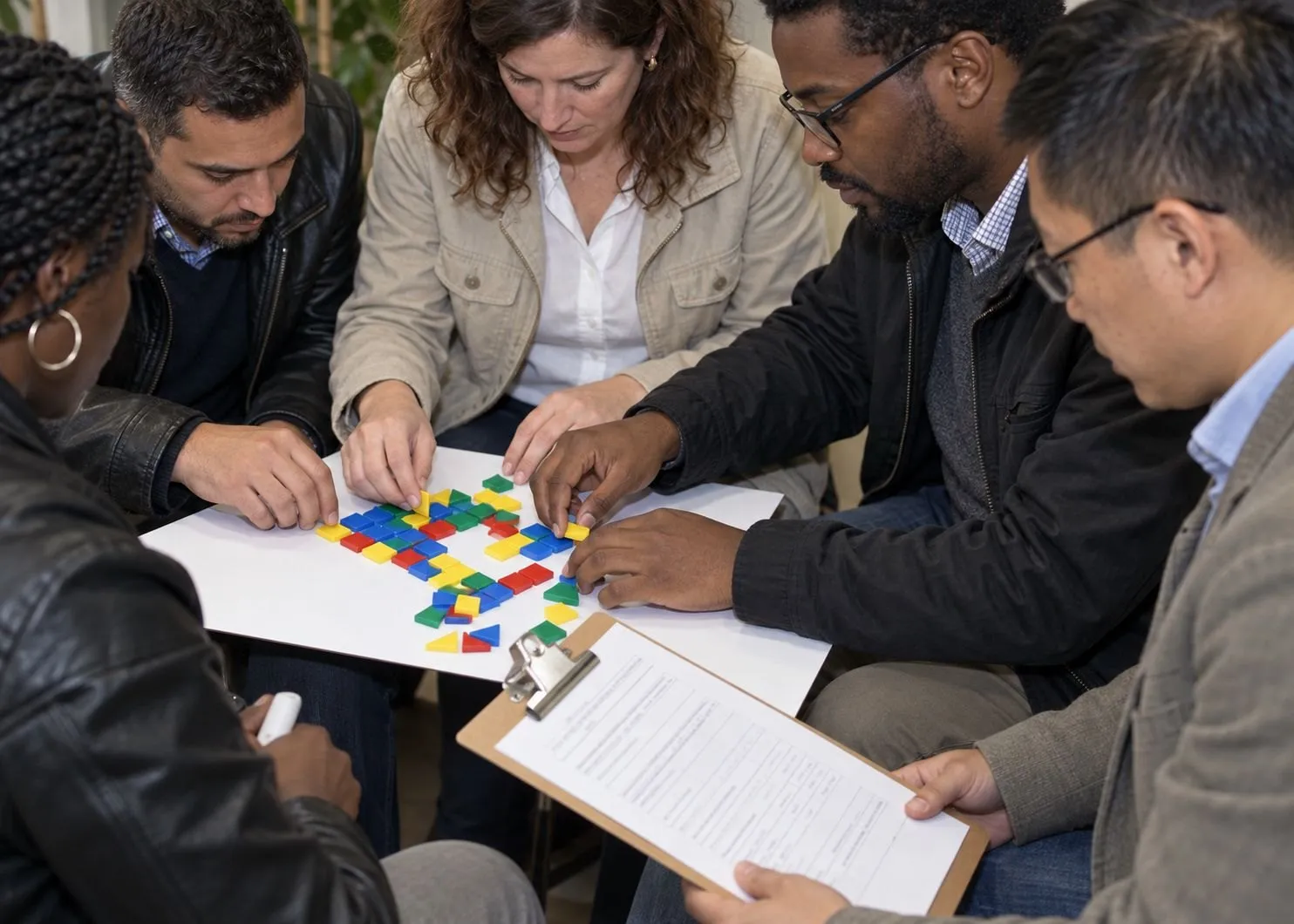
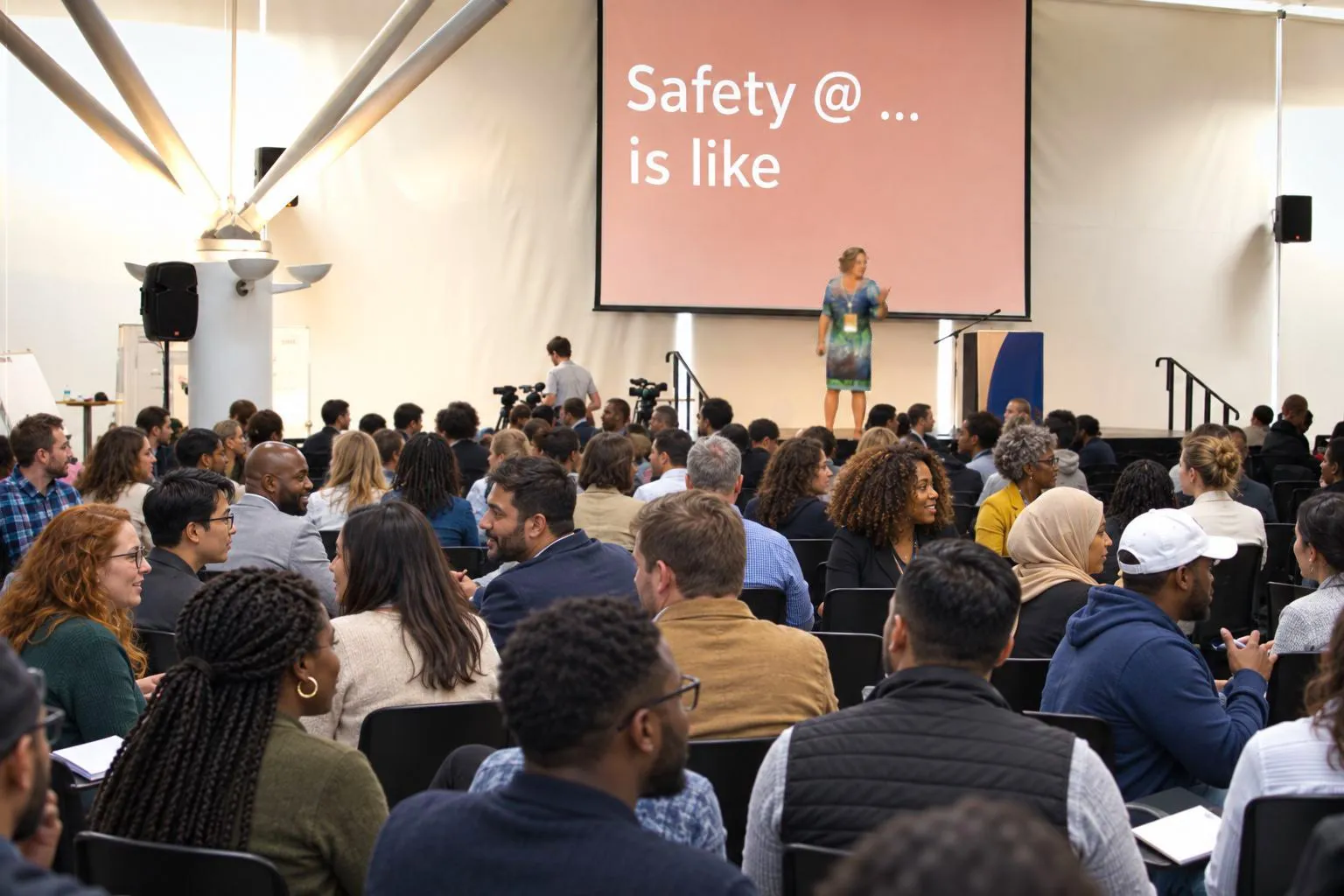
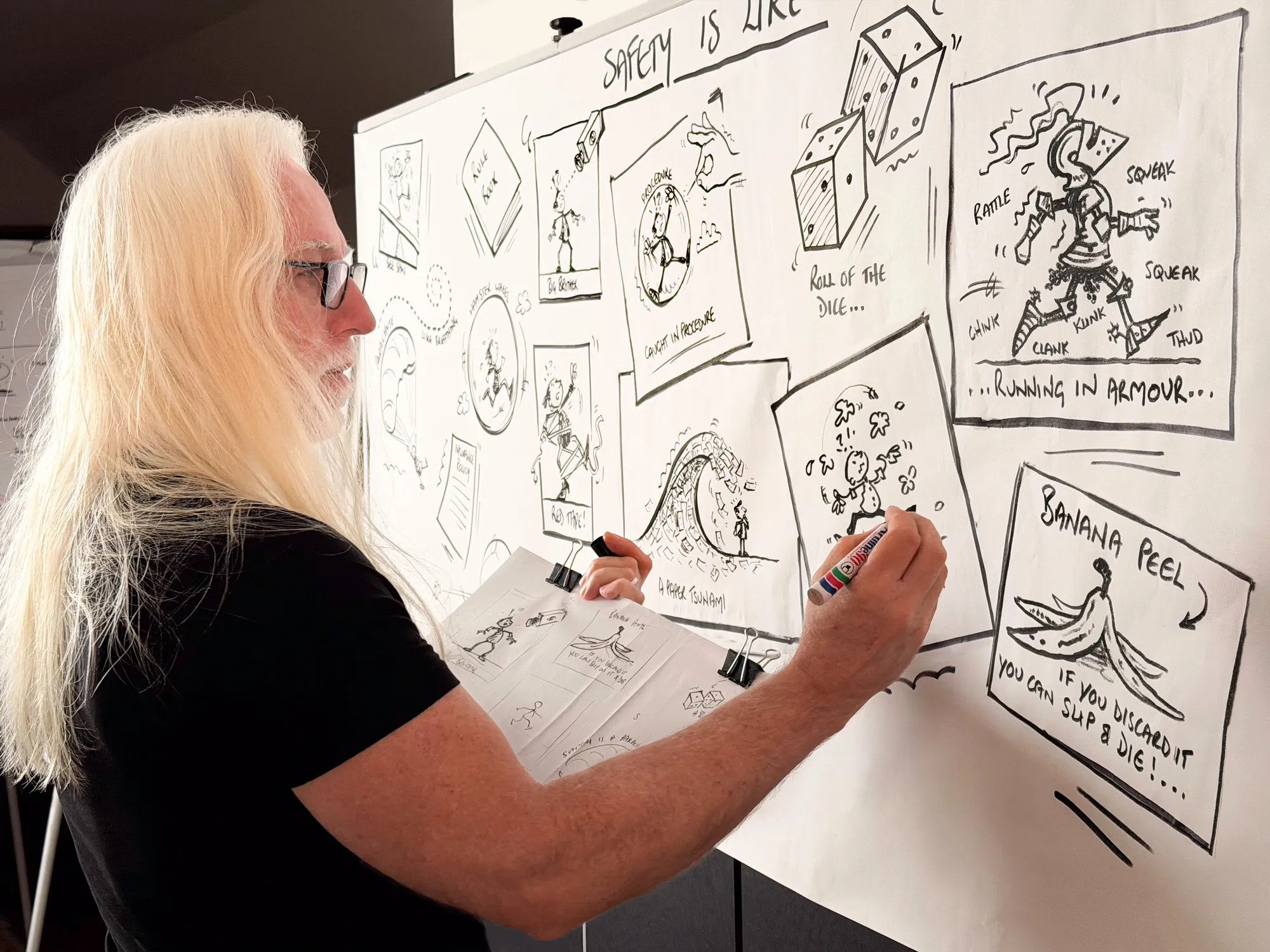
People complete a simple elicitation: “X is like…” At tables, they find the metaphor with the most energy and make it visible using Lego, clay, drawing, or whatever fits the room. As the work unfolds, James creates a live visual synthesis. Patterns, tensions, and relationships begin to appear across the whole group. The result is a shared picture of how people are making sense of the issue, including what would remain hidden in a survey or conventional workshop.

  • Small teams to groups of 400
  • Designed for in-person rooms, with virtual adaptation when needed
  • A visual synthesis that carries the conversation forward

From a session on safety

Finish the sentence.
Then see what appears.

Everyone in the room completes the same simple line. The answers are drawn as they are spoken, and a group begins to see itself. These are anonymised answers from an earlier session on safety.

Safety in our mine is like…

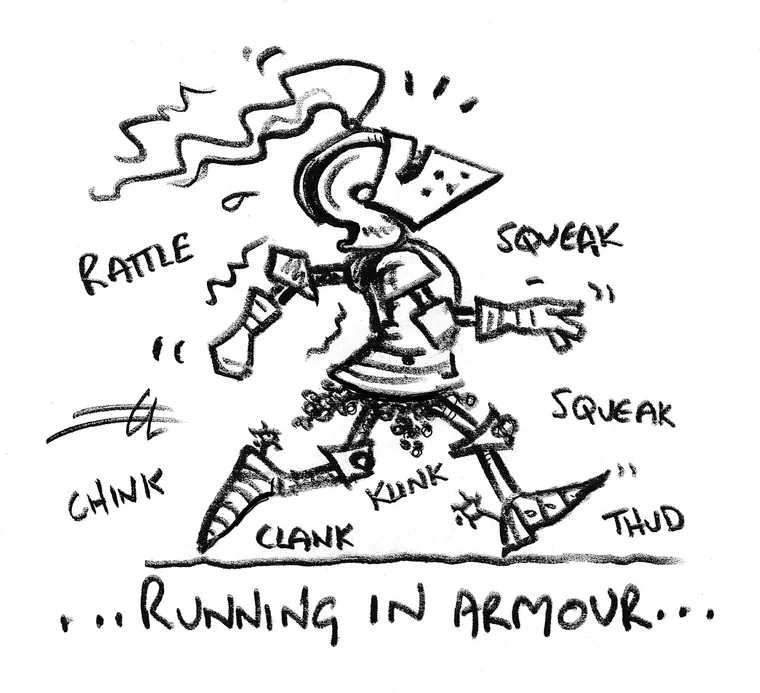
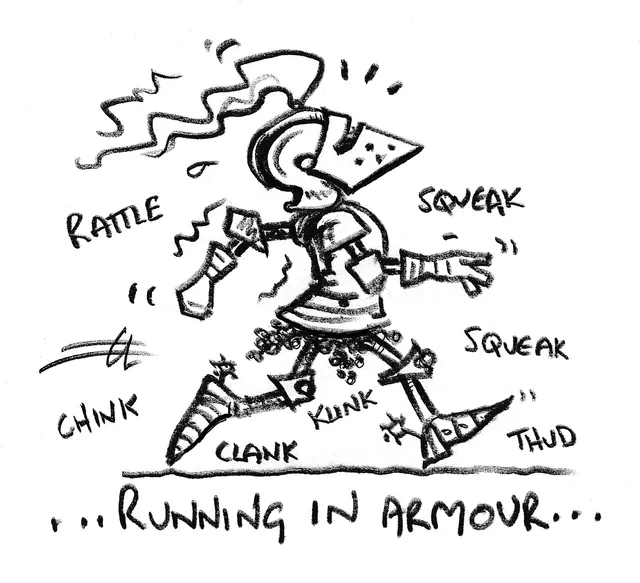
running in armour

The very thing meant to protect us may be slowing us down.

Hand-drawn knight running in armour that rattles, squeaks, clanks and thuds
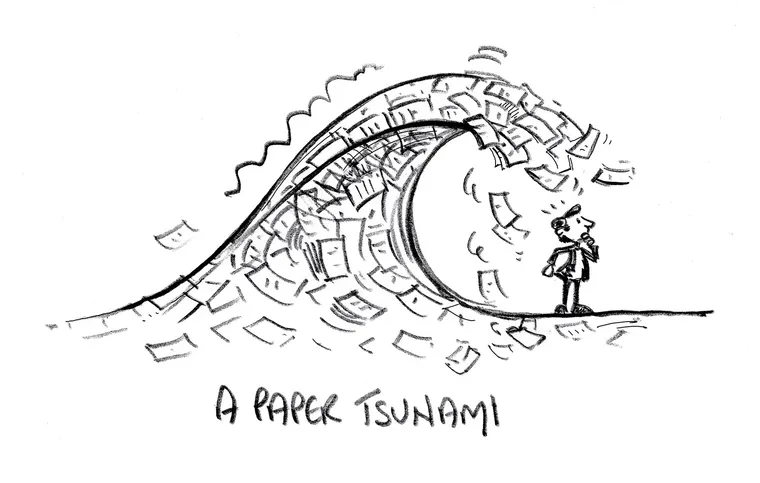
A small person looking up at a towering wave made of paper
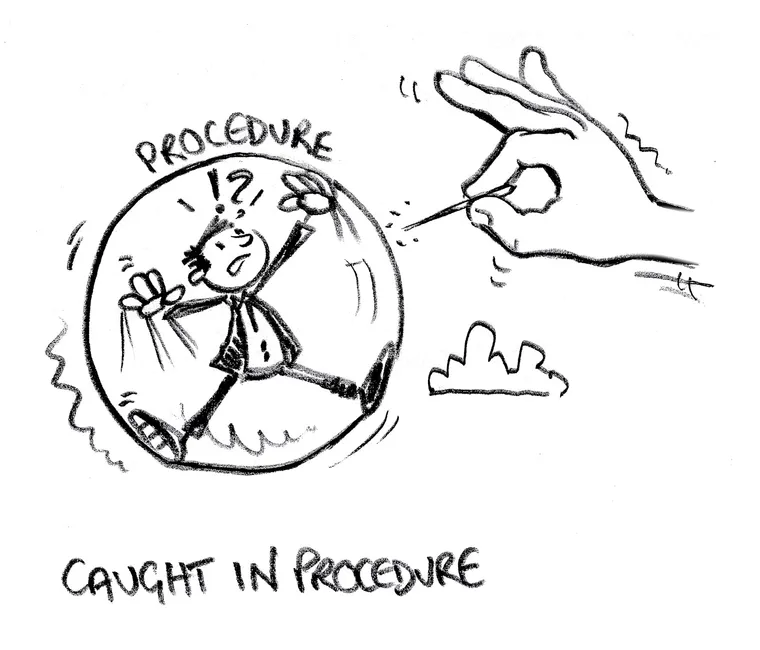
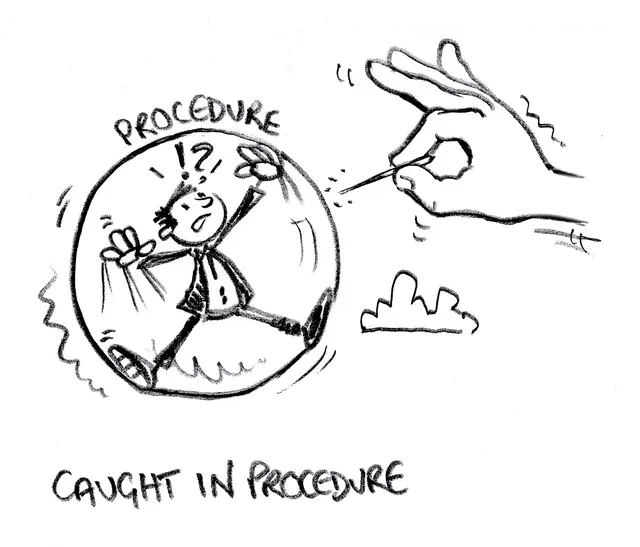
A person trapped inside a bubble labelled procedure, with a giant hand about to flick it

From many metaphors, a pattern

What emerges in the room.

Metaphors say more than the polite answer. These are anonymised outputs from earlier Metaphorology sessions. A group's language can hold assurance and unease at the same time. Safety was described as second nature, and also as running in armour. As protection, and as a paper tsunami.

  • Hand-drawn knight running in armour that rattles, squeaks, clanks and thuds
    Running in armour The very thing meant to protect us may be slowing us down.
  • A small person looking up at a towering wave made of paper
    A paper tsunami When the weight of procedure threatens to overwhelm the work itself.
  • A person trapped inside a bubble labelled procedure, with a giant hand about to flick it
    Caught in procedure A vivid signal that compliance and lived safety may have drifted apart.

Anonymous workshop output

From many metaphors, a shared picture.

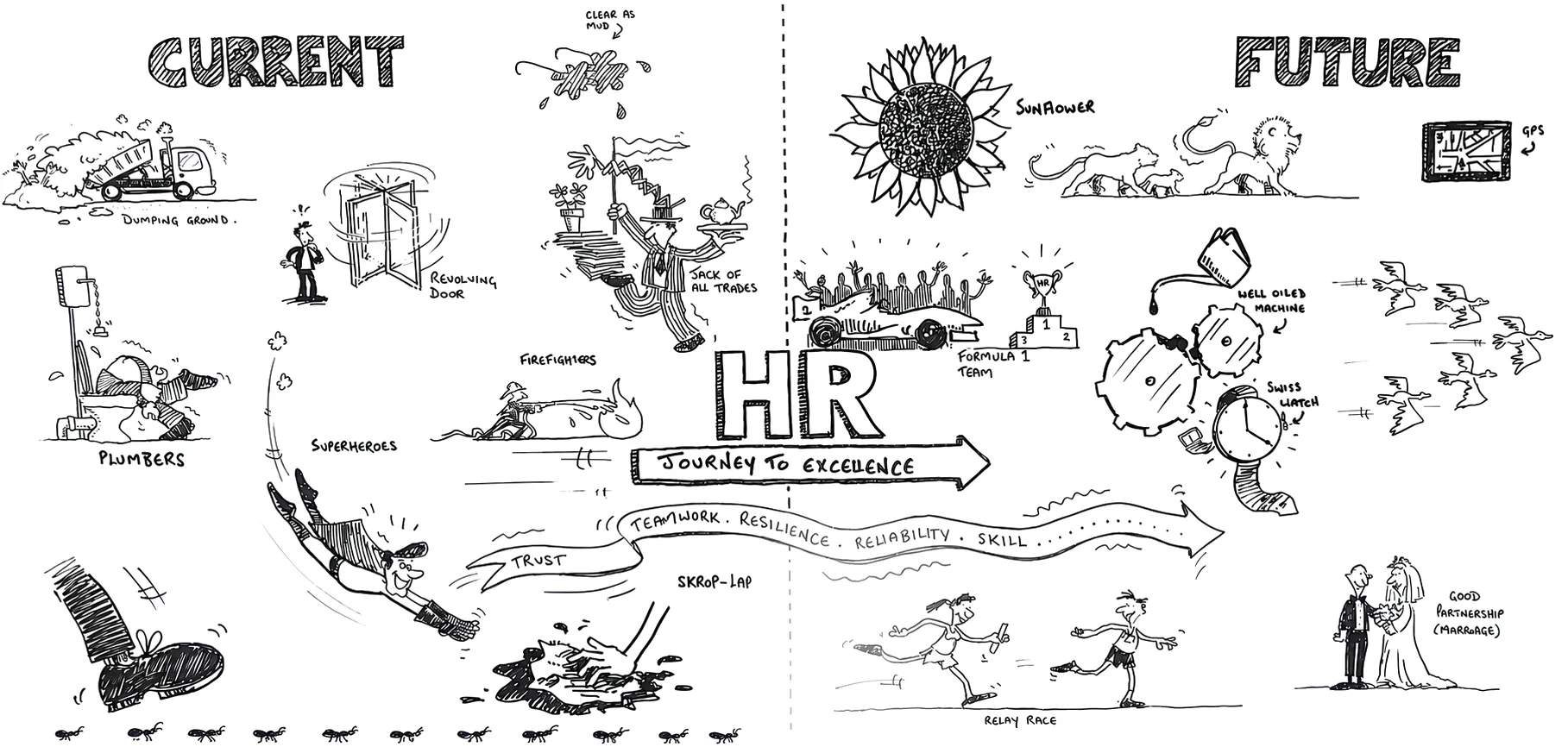
James gathers the images, tensions, and possibilities emerging across the room into a live visual synthesis. This one maps an HR team's current experience on the left, and the future it imagined on the right.

Anonymous live visual synthesis mapping an HR team's current experience and imagined future: from dumping ground, revolving door and firefighters to a well-oiled machine, a relay race and a Swiss watch

Scroll to pan across the wall.Swipe to explore the wall.

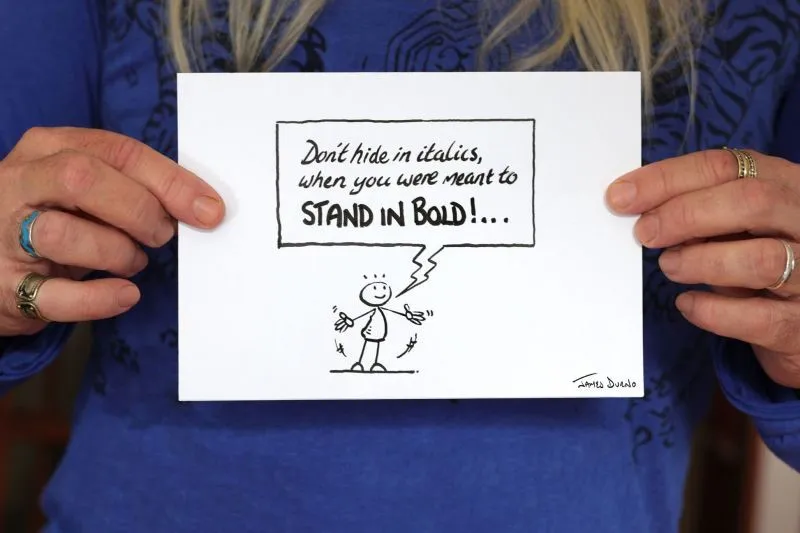
A person holding a hand-drawn card that reads: don't hide in italics, when you were meant to stand in bold

A metaphor can become an invitation people carry back into their work.

The wall comes down. The drawings go home, onto walls and into decks, and the sentence that landed in the room keeps doing its work weeks later.

Full-size live visual synthesis of an HR team's current experience and imagined future

Unashamedly human

Imagination is part of the method.

In a time of Teams meetings and AI, we make room for the forms of intelligence that appear when people use their hands, bodies, memories, and imaginations. The work is creative without becoming frivolous. It helps a group reach material that ordinary workshop language tends to flatten.

Where a metaphor earns its place

  • Strategy off-sites and leadership teams
  • Safety, risk and culture
  • Change, mergers and transformation
  • Purpose, values and identity
  • Conferences and large groups, up to 400

The shape of the work

A room people can think with.

  1. 01

    Enter

    A prompt, story, myth, or symbol opens the question differently.

  2. 02

    Make

    People give physical and visual form to what they mean.

  3. 03

    Move

    They stand inside the landscape, change position, and see from somewhere else.

  4. 04

    See together

    James gathers what is emerging into a shared visual field.

The collaboration

Two ways of noticing. One shared practice.

Sonja Blignaut

Facilitation & complexity

Sonja has spent more than 25 years working with people and organisations in complexity. She designs and holds the process: the question, the container, and the conditions in which people can encounter what they know differently.

Visit Sonja's site
James Durno

Visual thinking & synthesis

James is a strategic visual communicator, multidisciplinary artist, and one of South Africa's pioneers in graphic recording. He catches the emerging story of a room while it is still alive enough to be changed by what it sees.

Visit James's site

Bring us a question

Bring us your toughest tangles, your burning questions, or your highest visions.

We'll find the metaphor that gives them room to move.

Based in South Africa. In person first, with virtual adaptation when the room asks for it.